
Thyroid Surgery
Where is the Recurrent Laryngeal Nerve (RLN)?
Each side of the human neck has one recurrent laryngeal nerve (see the asterisk in the image below). Its function is to control the vocal cords. The thyroid is located in the front of the neck near the trachea and esophagus, and it is also close to the recurrent laryngeal nerve. The RLN is farther away from the thyroid in the lower neck, but as it ascends, it gets closer to the thyroid. When it enters the larynx, it is almost adjacent to the thyroid. This is why the RLN is most vulnerable during thyroid surgery.

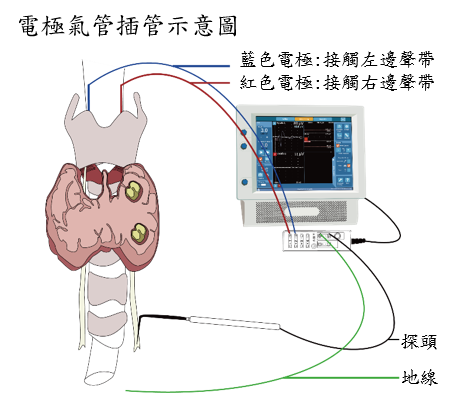
What is the Recurrent Laryngeal Nerve Monitoring System? (see right image)
It consists of two parts: - Electrode endotracheal tube - Probe After the patient is under general anesthesia, a specially designed electrode endotracheal tube is placed in the larynx, with the electrodes contacting the vocal cords. This is a standard, safe procedure for all general anesthesia surgeries. During surgery, the probe is used to accurately locate and identify the RLN main trunk and branches. When the nerve is stimulated, the electrodes on the vocal cords detect the signal, which is simultaneously sent to the monitoring device, showing an electromyogram and sounding an alert. This helps the surgeon identify and locate the RLN, reducing the risk of postoperative complications to a minimum.
Which surgeries use facial nerve or RLN monitoring?
- Thyroid surgery
- Parathyroid surgery
- Any surgery that may approach the RLN
In these surgeries, the lesion may be very close to or intertwined with the RLN. It is often necessary to identify and carefully dissect the RLN. Abnormal RLN anatomy cannot always be predicted before surgery, increasing the risk of RLN palsy. The best way to avoid this complication is to routinely identify and carefully separate the RLN during surgery. RLN monitoring is especially helpful in difficult surgeries, allowing the surgeon to locate the nerve and verify its conduction function in real-time. Although it cannot guarantee zero nerve injury, it provides a reliable tool, improving precision and safety, and reducing postoperative complications. This is particularly useful for challenging thyroid cancer cases, large tumors, or reoperative thyroid surgery.
Frequently Asked Questions (Q&A)
Q: If the patient uses RLN monitoring during surgery, can RLN palsy be completely avoided?
A: RLN monitoring significantly reduces the risk, but the following situations may still occur:
1. If the nerve is invaded and encased by a malignant tumor, part of the nerve may need to be sacrificed to remove the tumor completely.
2. If the tumor is located along the nerve path or there is severe adhesion from previous surgery, even careful dissection may temporarily stretch the nerve, causing temporary RLN palsy.