
Hearing Care 123
One definition of life is the ability to perceive external stimuli and respond to them. Besides vision, smell, and touch, sound and hearing are unique sensory abilities given to animals on Earth. Different animals can produce and detect sound waves of different frequencies. Dolphins can produce much higher-frequency sounds than humans, often referred to as “dolphin sounds,” while bats can emit extremely high-frequency sounds that humans cannot hear, known as ultrasound. Sound waves travel through air at approximately 340 meters per second. The number of vibrations per second is called frequency, measured in Hertz (Hz). According to basic physics, frequency multiplied by wavelength equals wave speed. Living organisms can adjust the tension of their vocal cords to change the frequency of the sounds they produce. This allows resonance in the upper respiratory tract and produces louder sounds.
The human voice typically ranges from about 80 to 200 Hz, with male voices generally lower and female voices higher. The human ear can hear frequencies roughly between 20 Hz and 20,000 Hz. Frequencies above 20,000 Hz are considered ultrasound. Dogs can hear sounds up to about 40,000 Hz, which is why they may detect subtle changes at night that humans cannot perceive. The amplitude of a sound wave represents the energy being transmitted, and it is measured in decibels (dB). Normal conversation is about 50 dB. Normal hearing means a person can detect sounds below 25 dB. If the minimum detectable sound level is between 25 and 40 dB, it is considered mild hearing loss. Between 41 and 70 dB is moderate hearing loss, where normal conversation becomes difficult. Between 71 and 90 dB is severe hearing loss, where communication becomes very challenging.
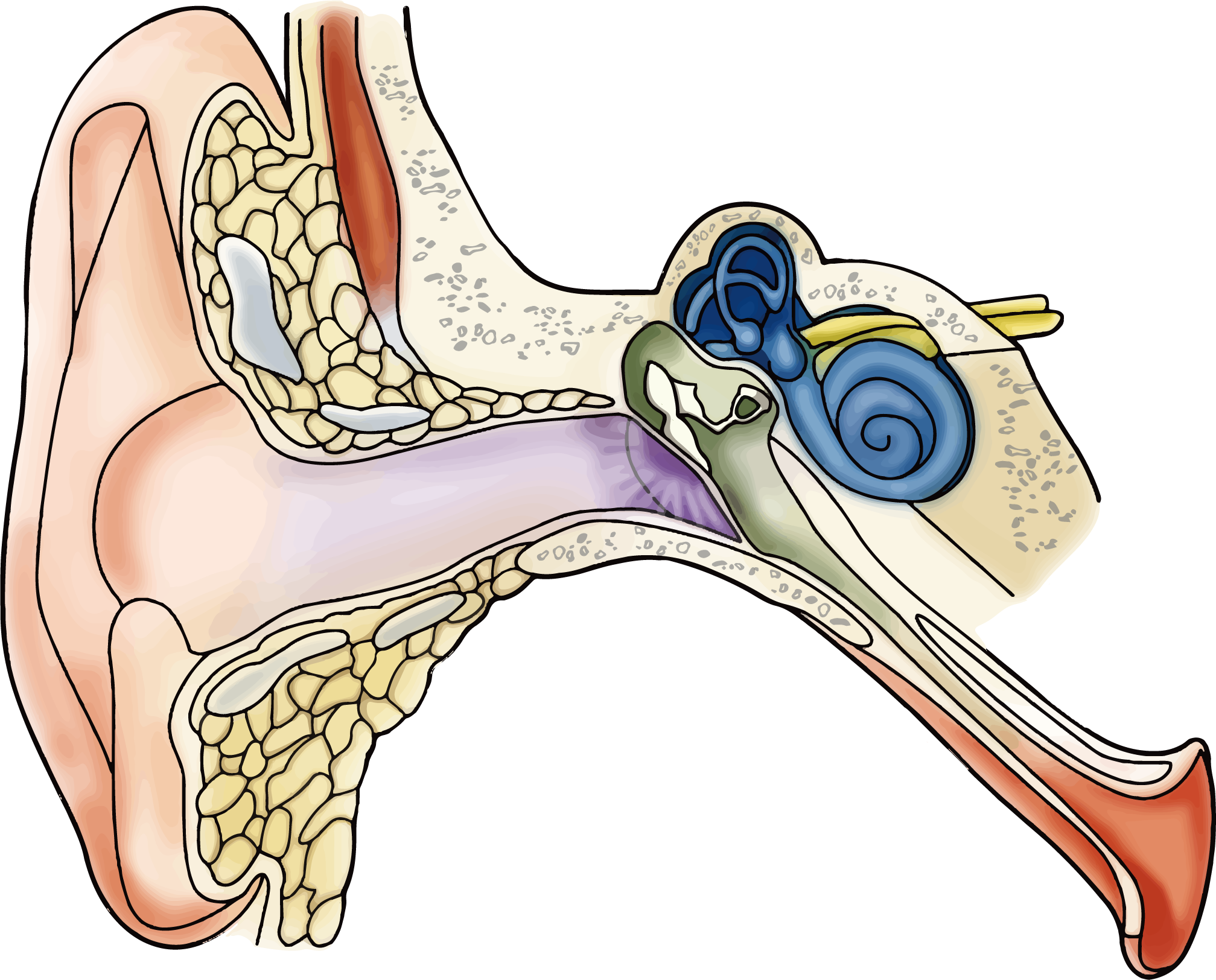
The ear is divided into three main parts: the outer ear, middle ear, and inner ear. The inner ear connects to the brain through the auditory nerve. Problems in any part of the ear may lead to hearing loss.
Common Causes of Hearing Loss
- Congenital hearing loss
Hearing impairment is one of the most common congenital conditions. About 1 in every 500–1000 newborns has severe hearing loss in both ears, and 2–3 have mild to moderate or unilateral hearing loss. Because the first year of life is critical for language development, early hearing screening is essential. Diagnosis within 3 months and early treatment can significantly improve language development. - Earwax blockage, middle ear fluid, or chronic otitis media
Symptoms such as ear fullness, discharge, or pus may be caused by earwax blockage, middle ear fluid accumulation, or repeated infections. These conditions can lead to hearing decline and should be evaluated by an ENT specialist. - Noise-induced hearing loss
Occupational noise exposure is an important workplace health issue. Studies have shown significant hearing loss among workers in noisy industries such as steel manufacturing. Entertainment venues such as concerts, discos, pubs, and KTVs also produce high noise levels that may cause acoustic trauma. - Age-related hearing loss
After age 50, hearing gradually declines. This is due to degeneration of the cochlea, auditory nerve, and decreased ability of the brain to interpret speech. Patients may experience the feeling of “hearing but not understanding.” - Sudden hearing loss
Patients often describe a sudden loss of hearing in one ear, sometimes noticed while using a telephone. Possible causes include inner ear circulation problems or viral infections. Immediate medical evaluation is recommended. - Ototoxic medications
Some medications may damage the inner ear. These include certain antibiotics (aminoglycosides), diuretics (furosemide), anti-inflammatory drugs such as aspirin, quinine, some chemotherapy drugs (e.g., cisplatin), and heavy metals like mercury or lead.
How to Protect Your Hearing
- Diet and lifestyle
Some patients with Ménière’s disease or inner ear fluid imbalance experience vertigo and hearing loss. Adequate sleep, reduced salt intake, and avoiding caffeine, alcohol, and smoking can help reduce attacks. - Medication awareness
Certain medications may affect hearing. If hearing problems occur while taking these drugs, consult your doctor to discuss possible alternatives. - Noise protection
Workers exposed to loud noise should wear protective earplugs. High-noise entertainment venues should also be avoided whenever possible. - Headphone use
In-ear headphones may increase the risk of ear damage due to their sealed design. Over-ear headphones provide better sound distribution and may allow lower listening volumes. Follow the “60/60 rule”: keep volume below 60% and listen for no more than 60 minutes per day.
Treatment and Rehabilitation for Hearing Loss
- Earwax blockage or middle ear disease
Conditions such as earwax blockage or chronic ear infections can often be treated medically or surgically by an ENT specialist. - Otitis media with effusion
Middle ear infections are common in children. If fluid remains in the middle ear for more than three months or significantly affects hearing, placement of ventilation tubes may be recommended.
Sudden Hearing Loss
Sudden hearing loss typically occurs in one ear and may be related to inner ear circulation problems or viral infections. Treatment often includes medications that improve blood circulation or reduce inflammation. Early treatment within one week significantly improves recovery chances. Approximately 60% of patients experience improvement.
Hearing Aids
People with moderate to severe hearing loss may have difficulty communicating in daily life. Hearing aids can significantly improve hearing ability and quality of life. However, many patients hesitate to wear hearing aids due to stigma or cost. Studies show that only about 39% of patients who need hearing aids actually use them. Proper use of hearing aids can improve communication and may also help reduce the risk of cognitive decline.