
Ultrasound-Guided Fine Needle Aspiration (FNA) Biopsy
There are multiple causes for neck masses, which may include thyroid tumors, lymphadenopathy, salivary gland tumors, or other rare masses. It is recommended to first consult an ENT head and neck surgeon for a thorough history and physical examination to make a preliminary diagnosis. For example, if nasopharyngeal cancer is suspected, a biopsy may be performed directly.
If further investigation is needed, the doctor may arrange for a head and neck ultrasound examination. If deemed necessary, ultrasound-guided fine needle aspiration (FNA) may be recommended to obtain cells for pathological examination by a cytopathologist.
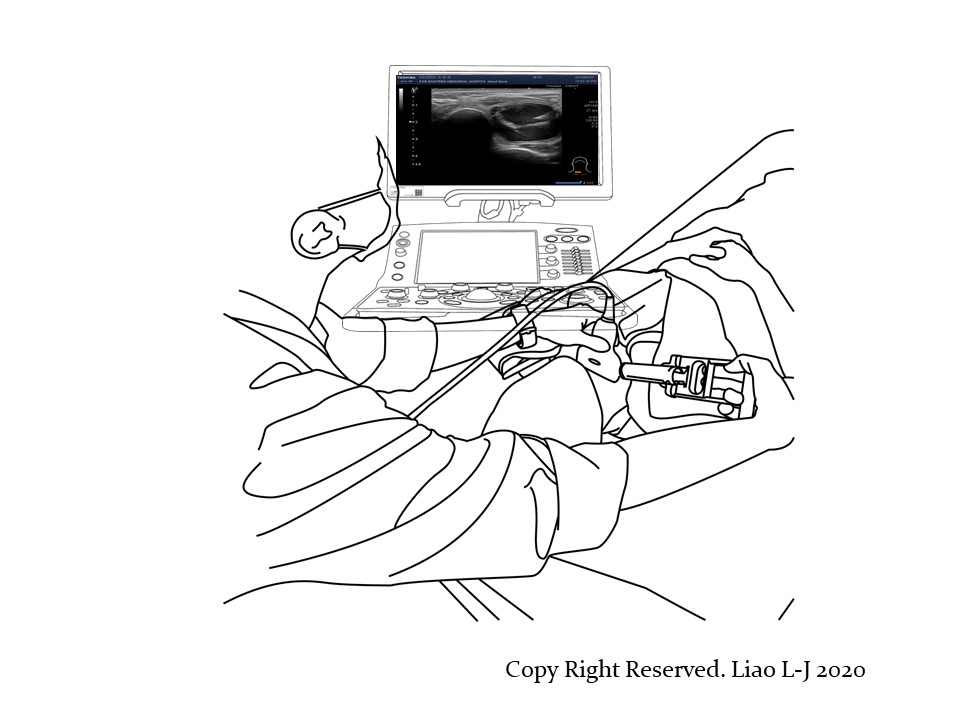
Ultrasound-Guided Fine Needle Aspiration Steps
- Disinfect the skin
- Local anesthesia may be injected
- Perform several passes with the fine needle under ultrasound guidance to obtain appropriate cell samples
- Fix the specimen and send it to a cytopathologist for examination
- Apply local pressure to the puncture site for approximately 15 minutes
- Return to the clinic one week later to review the report
Possible Complications of Ultrasound-Guided Fine Needle Aspiration
- Bruising similar to that of a blood draw
- Minor local pain
- Occasional swelling with slight bleeding
- Most symptoms will disappear within a few days
- Alternative option: Surgery to directly remove the neck mass